



Explore
About Us
The Jersey Royal is a unique potato, lovingly crafted and carefully grown on the island since the late 1800s. The island itself is optimal for growing potatoes, with its unique microclimate, soil and environment creating the perfect conditions for this special spud to flourish.
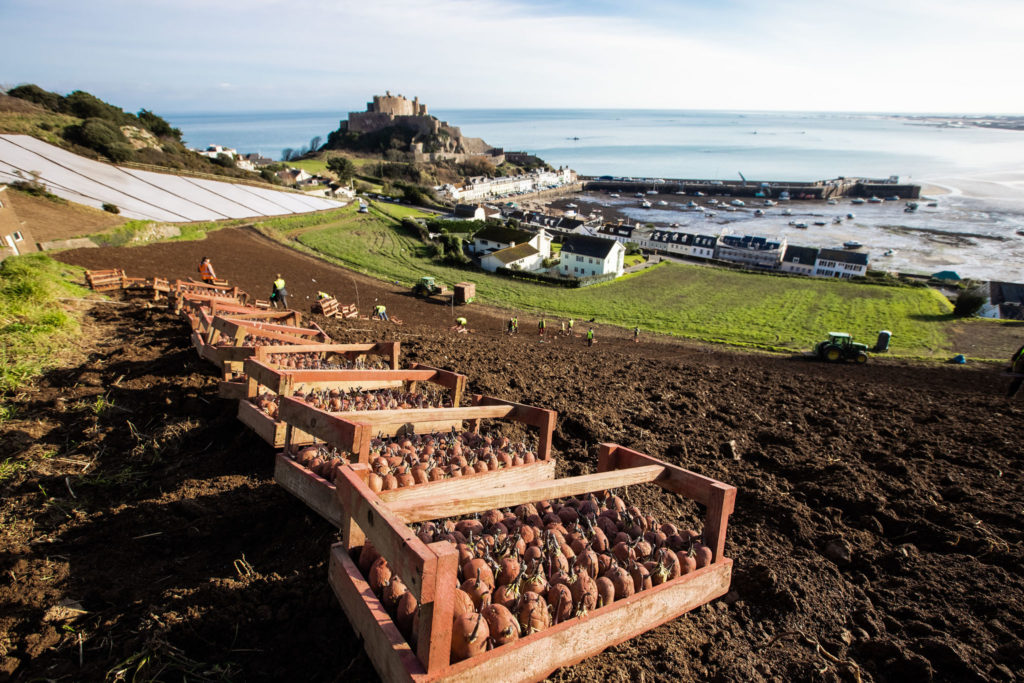
Jersey soil is light and well-drained, with many farmers still using seaweed harvesting from Jersey beaches as a natural fertiliser (which is known locally as vraic). Jersey has some of the most formidable tidal flows in the world, and the strong movement of the sea deposits large quantities of vraic on the shore. This practice of using vraic on the land dates back to the 12th century.
The Jersey Royal season is an exciting time for all involved, and the season begins in November with planting under glass. The main outdoor crop is planted from January to April, with harvesting from the end of March through to the July. The peak of the season is May to June, when up to 1,000 tonnes of Royals can be shipped daily.
Potatoes planted on the early slopes are hand-lifted, with mechanical harvesters used only for the later, flatter fields. The fields on slopes near the coast – known as côtils – are so steep that almost all the work is done by hand.
Once harvested, the level of care continues at each stage. Jersey Royals are checked twice by workers and quality controllers before being packed and loaded into refrigerated trailers for export. The potatoes are harvested, graded, packed and shipped daily to ensure that consumers are buying them when they are at their freshest and finest.
Besides being unique to Jersey, the Jersey Royal carries two protected designations ‘Designated Origin UK Protected’ and ‘Geographical Indication UK Protected’. This, in addition to Jersey’s unique growing conditions, make these potatoes particularly unique.
